
Planning a Hindu–British fusion wedding: how we did ours
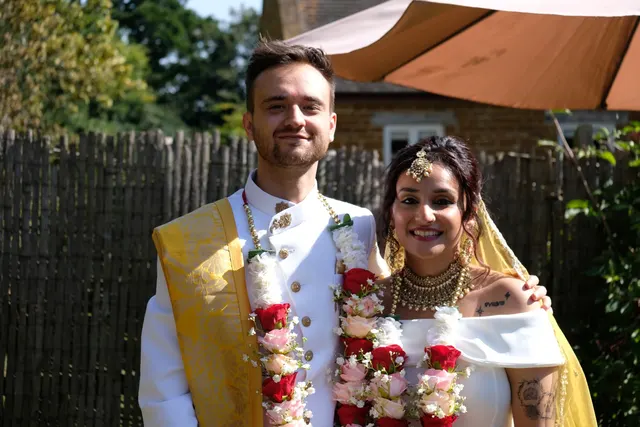
When Matt and I planned our wedding, two cultures came together: Gujarati and British. We had 5 functions over 4 days, 150 guests, gluten-free, vegetarian, vegan and non-veg guests, and an opinion from every auntie. Here's how our wedding actually ran, and what we'd tell any couple planning a fusion wedding.
Our wedding, day by day
Day 1: Mandvo and Pithi
- Mandvo and Mameru at my maternal home, just for me and my family.
- Pithi back at our home, for both of us. (We ran out of pithi paste halfway through. Make more than you think.)
Day 2: Sangeet An evening at a venue with a DJ and catering, for everyone. Indian outfits for all guests, from both families. It fell on Janmashtami, Lord Krishna's birthday, which felt fitting, so the menu was vegetarian and fasting-friendly.
Day 3: the wedding day
- Morning: the groom's arrival, Gujarati style, then my entrance.
- The civil ceremony: our legal marriage.
- Then the Hindu rituals: Jaimala (garland exchange), Mangalsutra and Sindoor, and the ring game.
- Wedding breakfast and speeches.
- A break in the afternoon. It was the hottest day of the year, so we had inflatables for the guests and chai on tap. Everyone was grateful.
- The evening reception: the wedding party's entrance, our first dance, the feast, then the dancing.
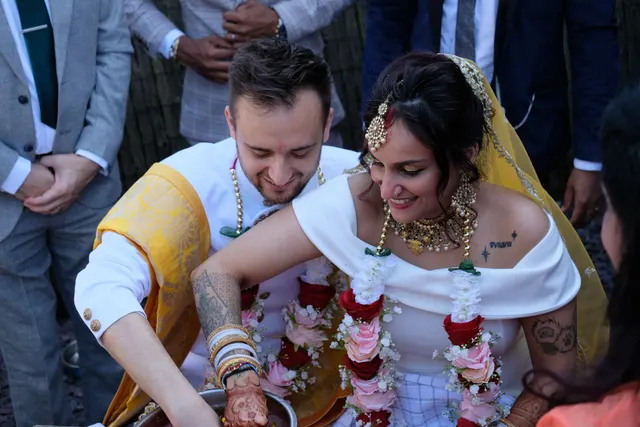
Day 4: Vidaai The next day, back at my maternal home for the Vidaai, with home-cooked food.
What we'd tell other fusion couples
1. Decide: one joint ceremony or two separate ones This is the biggest choice, and it shapes everything else.
- One joint ceremony: a civil ceremony at a licensed venue, with Hindu rituals woven in. That's what we did. One venue, one day, and a lower cost.
- Two separate ceremonies: a full Lagna around the sacred fire, plus a civil or church ceremony. That's more time and cost, but each side gets its ceremony in full.
2. Sort the legal bit early In England and Wales, a Hindu ceremony isn't legally binding on its own. The civil ceremony is your legal marriage. You both need to give notice at your local register office at least 29 days before, so don't leave it to the last month.
3. Choose venues that work for both If you're holding a Lagna, check that the venue allows a sacred fire. Many don't. For a joint ceremony, the venue needs to be licensed for civil weddings.
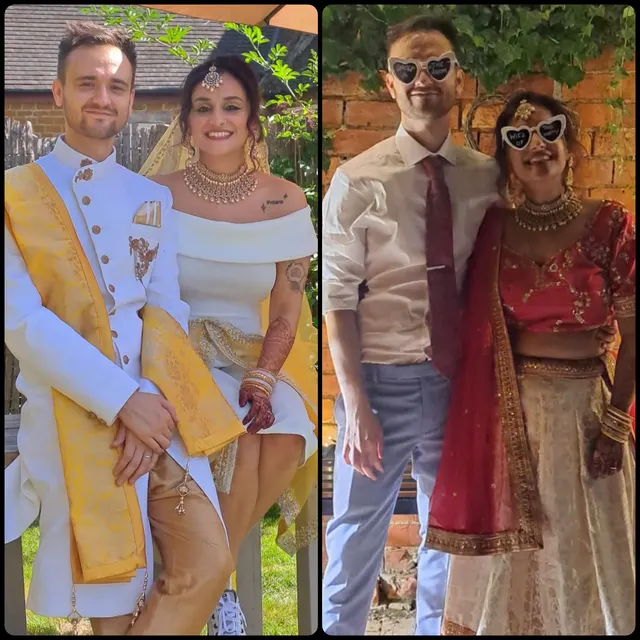
4. Swap the outfits We swapped. For the ceremony, I wore an English wedding dress and Matt wore Indian. For the reception the same evening, Matt wore a suit and I wore a lehenga. It brought the whole day together. Give the non-Indian side time to shop, because made-to-measure outfits can take months.
5. Plan food that feeds everyone We ended up with two caterers, both serving at the wedding breakfast: Italian (Matt's favourite) and Indian (for my side). In the evening we kept both: an Indian feast, with pizza as the Italian half. Between them they covered gluten-free, vegetarian, vegan and non-veg. Check the Hindu calendar for your dates too (ours fell on Janmashtami, so the Sangeet menu had to be fasting-friendly), and ask about Jain options early if you need them.
6. Do the seating plan like a peace treaty Every family has two uncles who can't sit next to each other. Ask both families early who needs space from whom, before the table plan is printed.
7. Plan the gap A long wedding day needs a proper break between the wedding breakfast and the reception. Give guests something to do: shade, chai, games. Our inflatables were the surprise hit.
8. Know your bar One side may want chai on tap, and the other may want shots on tap. (In our case, some of the aunties were firmly in the shots camp.) Agree the drinks plan with both families, and with the venue's licence, before the day.
9. Help both families understand each other Share the plan, so everyone's looking at the same one. A one-line explainer for each ritual on the order of service helps guests who've never been to a Hindu wedding.
The bit nobody tells you
Fusion weddings mean twice the traditions, but you don't have to do everything. Pick what matters to you both and let the rest go.
The Evaraa planner handles fusion weddings. Choose Hindu Gujarati and British, decide between a joint ceremony or two separate ones, and it merges the events for you.
FAQ
Is a Hindu wedding legal in the UK?
Not on its own in England and Wales. You also need a civil ceremony or registration.
Can you combine a civil and a Hindu ceremony?
Yes, at a licensed venue that allows the rituals you want. Check about the sacred fire.
How much notice do you need to give?
At least 29 days, at your local register office.
How many days is a fusion wedding?
Ours ran over 4 days with 5 functions, but many couples fit it into one or two.