
Gujarati wedding rituals explained: from Pithi to Vidaai
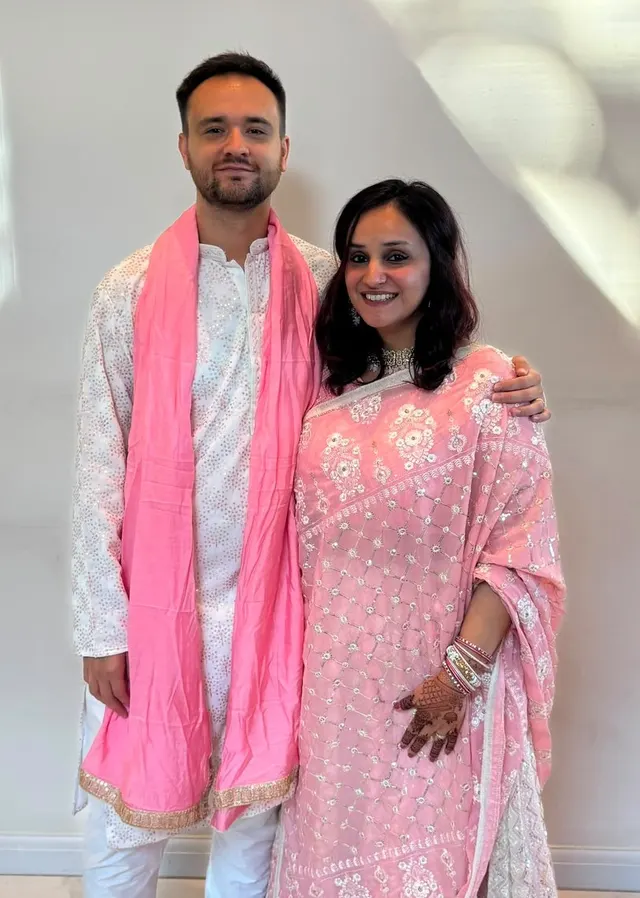
A Gujarati wedding usually runs across five to seven events: Gol Dhana (the engagement), the pre-wedding pujas and Mameru, the Pithi, a Sangeet or Garba night, the wedding day (Lagna), the reception and, for some families, a welcome home. Here's what happens at each, in the order most families follow.
Every family does things a little differently. Your priest and your elders will know your family's way. This guide is a starting point, not a rulebook.
1. Gol Dhana: the engagement
The families formally agree, and the couple exchange rings. Gol dhana means jaggery and coriander seeds, shared as a sweet blessing. Some families start with a Chandlo Matli, where the bride's family put a chandlo (tilak) on the groom and bring a matli of sweets.
These days many couples turn the Gol Dhana into a full celebration, with an entrance for the bride-to-be or the couple, a stage, catering and a DJ. Others keep it small and at home. In the end, it's about the celebration that feels right to you both.
2. Pre-wedding pujas and Mameru
Prayers at home to bless the wedding: Ganesh Sthapana, Mandvo Mahurat and Grah Shanti. This is also when the bride's mama (maternal uncle) and his family bring the Mameru, gifts for the bride, often including the saree she'll wear for the wedding. The groom's side has the equivalent, Mosalu.
3. Pithi: the turmeric ceremony
Family smooth turmeric paste onto the couple to bless them and bring a glow before the wedding. It's joyful, messy and usually at home. Wear something you don't mind turning yellow.
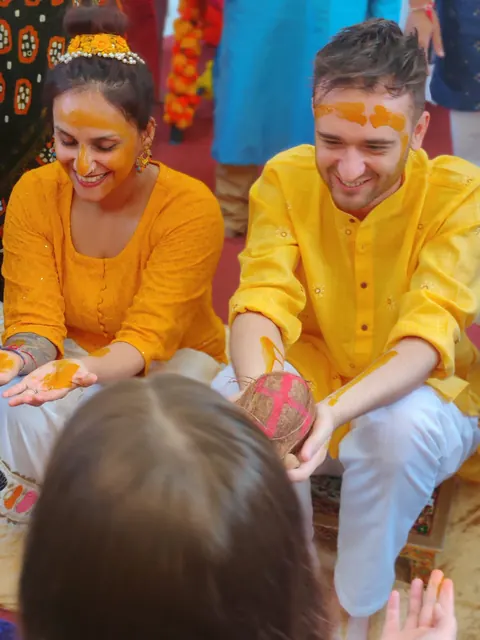
At ours, we ran out of pithi paste halfway through, and the aunties whipped up a fresh batch on the spot. Make more than you think you'll need. If you're holding it at home, lay down old sheets or plastic first. Your carpets will thank you.
4. Sangeet night: Garba and Dandiya
An evening of music, henna and dancing. Expect garba, dandiya raas and dhol. Bridal mehndi is often the same day or the day before.
In recent years, the Sangeet has also become the night for performances. Siblings, cousins and friends rehearse choreographed dances for weeks, so don't be surprised when your family reveals a performative side you never knew they had.
5. The wedding day: Lagna
The ceremony takes place around the sacred fire, under the mandap. In order:
- Jaan: the groom's procession arrives.
- Ponkhvu: the bride's mother welcomes him.
- Madhuparka: the groom is offered a sweet drink. Watch for the Joota chupai, when the bride's sisters hide his shoes.
- Kanya Aagaman and Antarpat: the bride is brought in, with a cloth held between the couple.
- Jaimala: the garland exchange.
- Kanyadaan and Hast Melap: the bride's parents give her hand, and the couple's hands are joined.
- Mangal Fera: four rounds of the sacred fire.
- Saptapadi: seven steps, seven vows.
- Sindoor and Mangalsutra: the groom marks the bride as married.
- Vidaai: the emotional farewell as the bride leaves with her new family.
After the Vidaai, many couples sit down to their wedding meal with family. Then there's usually a short break to rest and change before the evening reception. Some families do it in a different order, so plan the day around what works for you and both families.
Your venue must allow a sacred fire. Ask about this before you book.
Is the Lagna a legal marriage? Not on its own in England and Wales. You'll also need a civil registration: give notice at your local register office at least 29 days before, then marry at the register office or with a registrar at a licensed venue. Many couples do this on the same day as the Lagna, or in the weeks before. (The rules are different in Scotland and Northern Ireland.)
6. Reception
The evening celebration and dinner for all your guests: entrances, speeches and a first dance.
7. Griha Pravesh: welcome home
The bride is welcomed into her new home, often with the Aeki Beki ring game. Whoever finds the ring first is said to rule the house.
Planning around your rituals
The free Evaraa planner starts with your traditions. Pick your events, untick any rituals your family doesn't do, and it builds your budget and booking order around them.
FAQ
How many days is a Gujarati wedding?
Usually spread over three to seven days, depending on the family.
What is Pithi?
A turmeric ceremony where family bless the couple before the wedding.
What is Mameru?
Gifts from the bride's maternal uncle's family, often including her wedding saree.
Is a Hindu wedding legally binding in the UK?
Not on its own in England and Wales. You also need a civil registration.